What the numbers tell us:
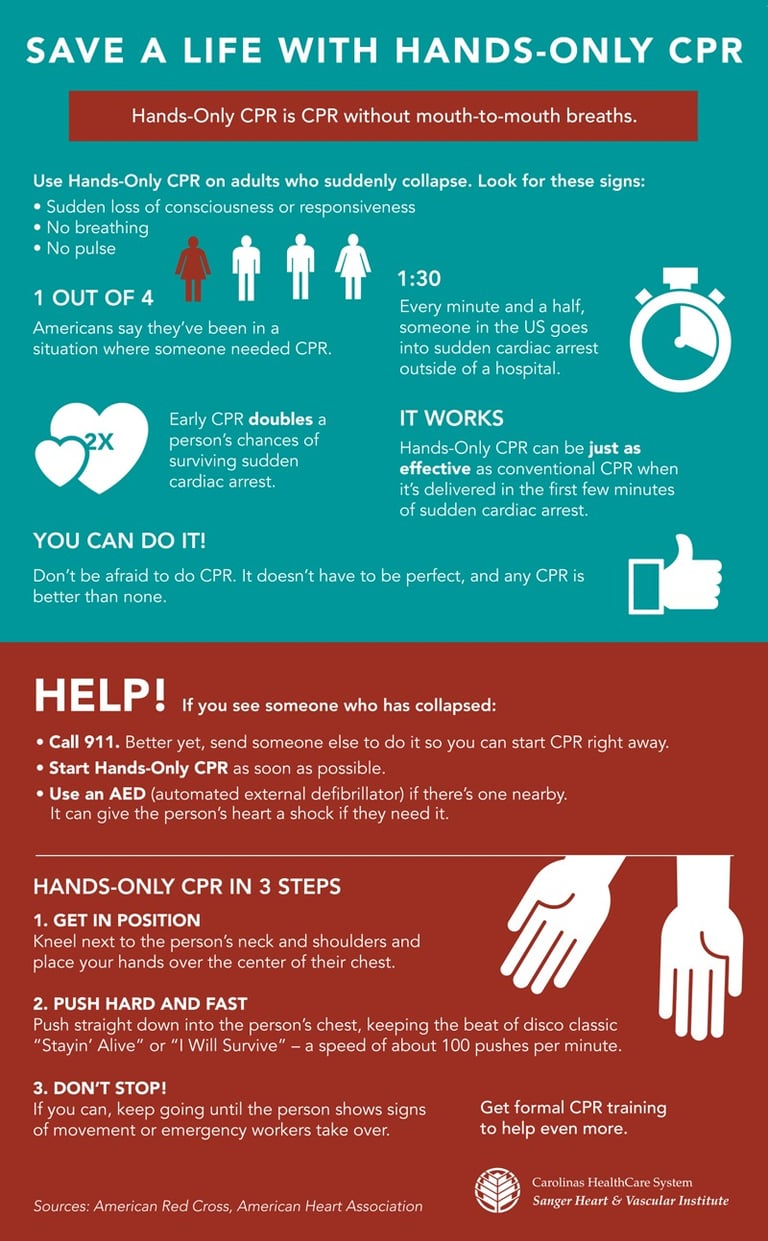
Over 356,000 cardiac arrests occur outside of a hospital every year in the United States — nearly 90 percent of them are fatal. American Heart Association That is not a statistic about the elderly or the unhealthy. That is a statistic about our neighbors, our coworkers, and our families.
It most often happens at home — the majority of adult out-of-hospital cardiac arrests occur at a home or residence. American Heart Association Not at a gym. Not at a hospital. At home — where a trained family member or neighbor is often the only person available to act.
Survival rates remain dangerously low — for the past 20 years, the survival rate for cardiac arrest has hovered around 10 percent for out-of-hospital incidents. American Red Cross That number has not moved nearly enough — and a lack of bystander training is one of the primary reasons why.
Every second matters — survival chances decrease by 10 percent for every minute that immediate CPR and use of an AED is delayed. American Red Cross By the time emergency services arrive, it is often too late without intervention from someone already on the scene.
Out-of-Hospital Cardiac Arrest — The Big Picture
Cardiac arrest does not discriminate. It can happen to anyone, anywhere, at any age.
Octavia's Promise exists because these numbers do not have to stay this way. Every person we train is one more person capable of changing them.
Survival Rates — With and Without CPR
The difference between acting and waiting is measured in lives.
What the numbers tell us:
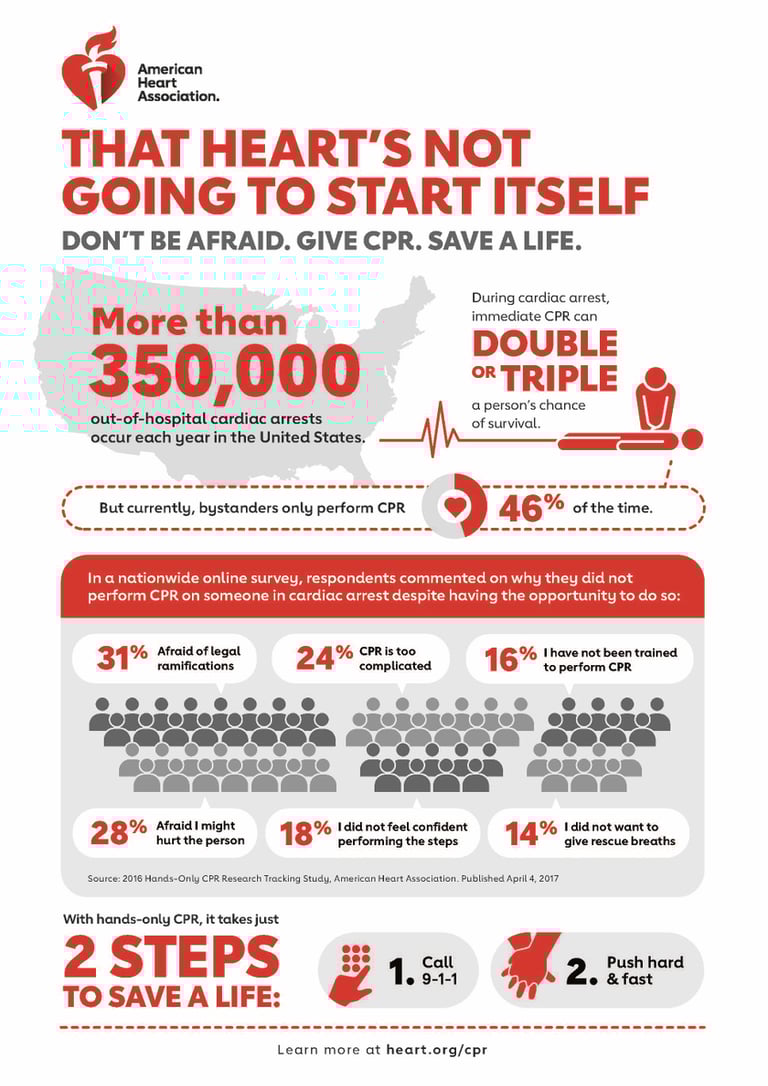
CPR can double or triple the chance of survival — if performed immediately, CPR can double or triple the chance of survival from an out-of-hospital cardiac arrest. American Heart Association That is not a minor improvement. That is the difference between a funeral and a phone call home.
The gap between acting and not acting is staggering — survival to hospital discharge was 13% for patients who received bystander CPR versus 7.6% for those who did not. Sudden Cardiac Arrest Foundation Every person who steps forward and acts nearly doubles someone's chance of going home.
Timing is everything — survival chances decrease by 10% for every minute that immediate CPR and use of an AED is delayed. American Red Cross Emergency services do their very best — but in most communities they simply cannot arrive fast enough without someone already acting on the scene.
Hesitation costs lives — about 70% of Americans feel hesitant to perform CPR, often because they lack training or worry their skills are rusty. CPR1 That hesitation is not a character flaw. It is a training gap. And it is exactly what Octavia's Promise is here to close.
What the numbers tell us:
CPR can double or triple the chance of survival — if performed